

Weekly insights for Tax & Product Leaders. No slop, just interesting data points you can reflect on with your ☕ :)
📊 Everyone’s experimenting. Almost no one is scaling.
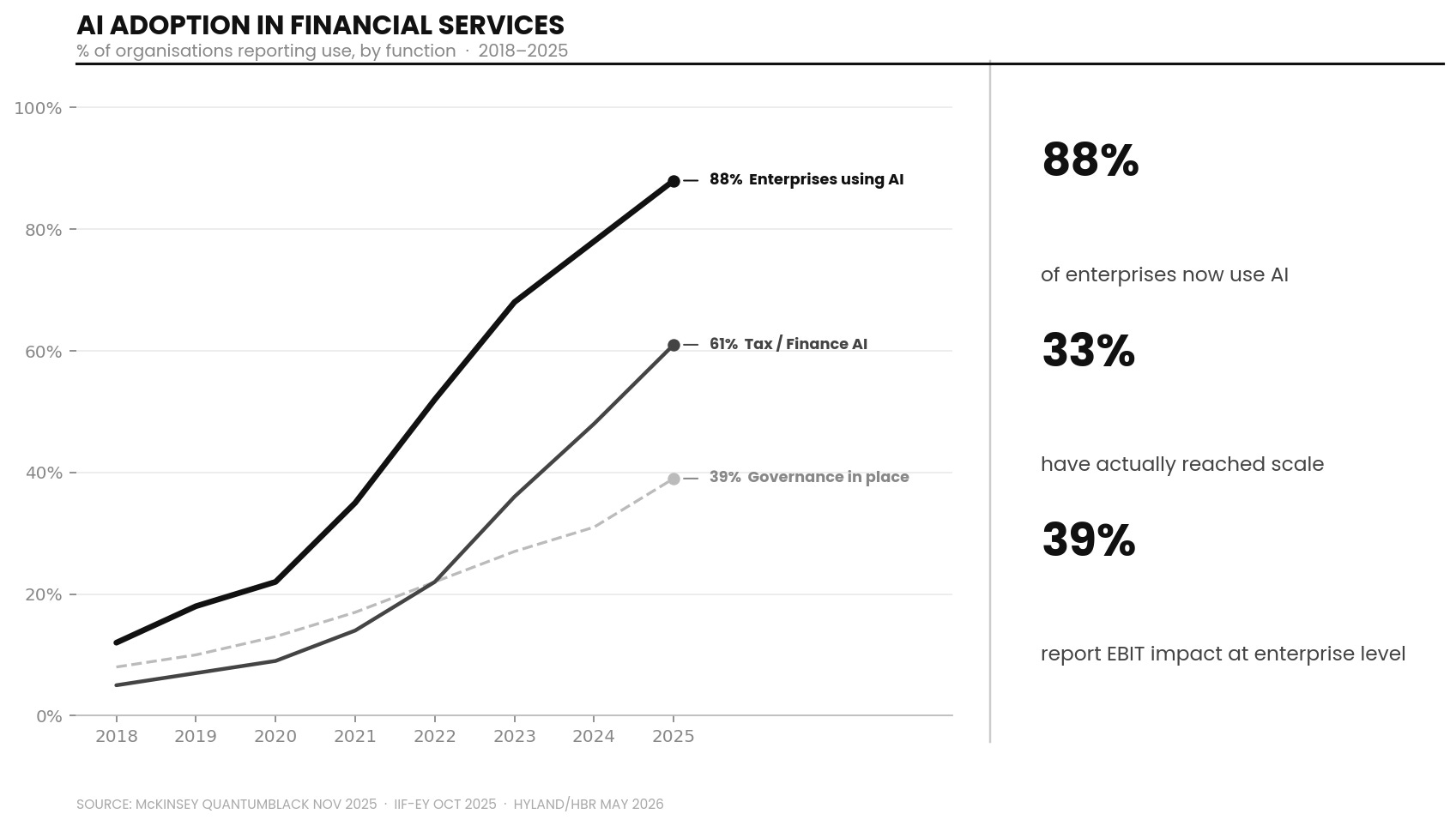
Three years into the gen AI era, 88% of enterprises use AI in at least one function, and 61% use it in Tax/Finance. Only 33% are scaling it, and only 39% see any impact on EBIT.
In tax and finance, it’s worse. Use cases are still stuck in document processing and chatbots. Not reconciliation automation. Not real-time VAT determination. Chatbots at most.
Looks like Tax folks are still in the pilot phase. Worth remembering that a TaxTech roadmap without workflow redesign isn’t a business reinvention for the AI era — it’s making the old way a bit faster. I even wrote an article about this.
McKinsey QuantumBlack, Nov 2025
🏗️ The bottleneck isn’t the AI. It’s the plumbing.
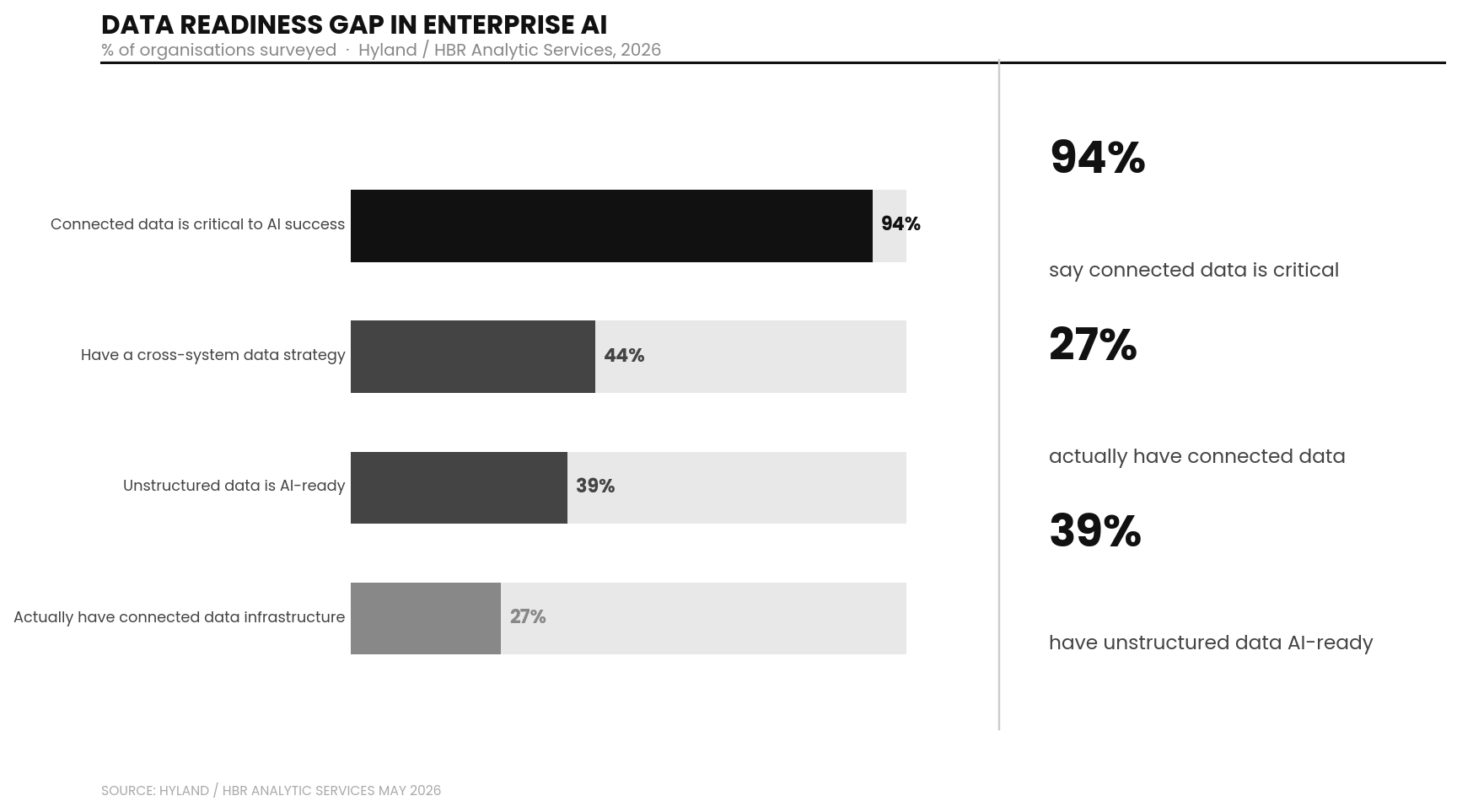
94% of organizations say connected data is critical to AI success. Only 27% actually have it. And only 39% of unstructured data — the kind that dominates tax departments — is ready for AI use.
Tax data lives across ERPs, invoicing platforms, e-invoicing networks, and legacy GL systems. Nothing is connected by design. You can’t drop an AI reconciliation agent on top of that and expect it to work.
The model isn’t the problem. You need to assign a Tax PM to the data architecture problem.
Hyland / HBR Analytic Services, May 2026
🔐 Your AI vendor stack is now an attack surface.
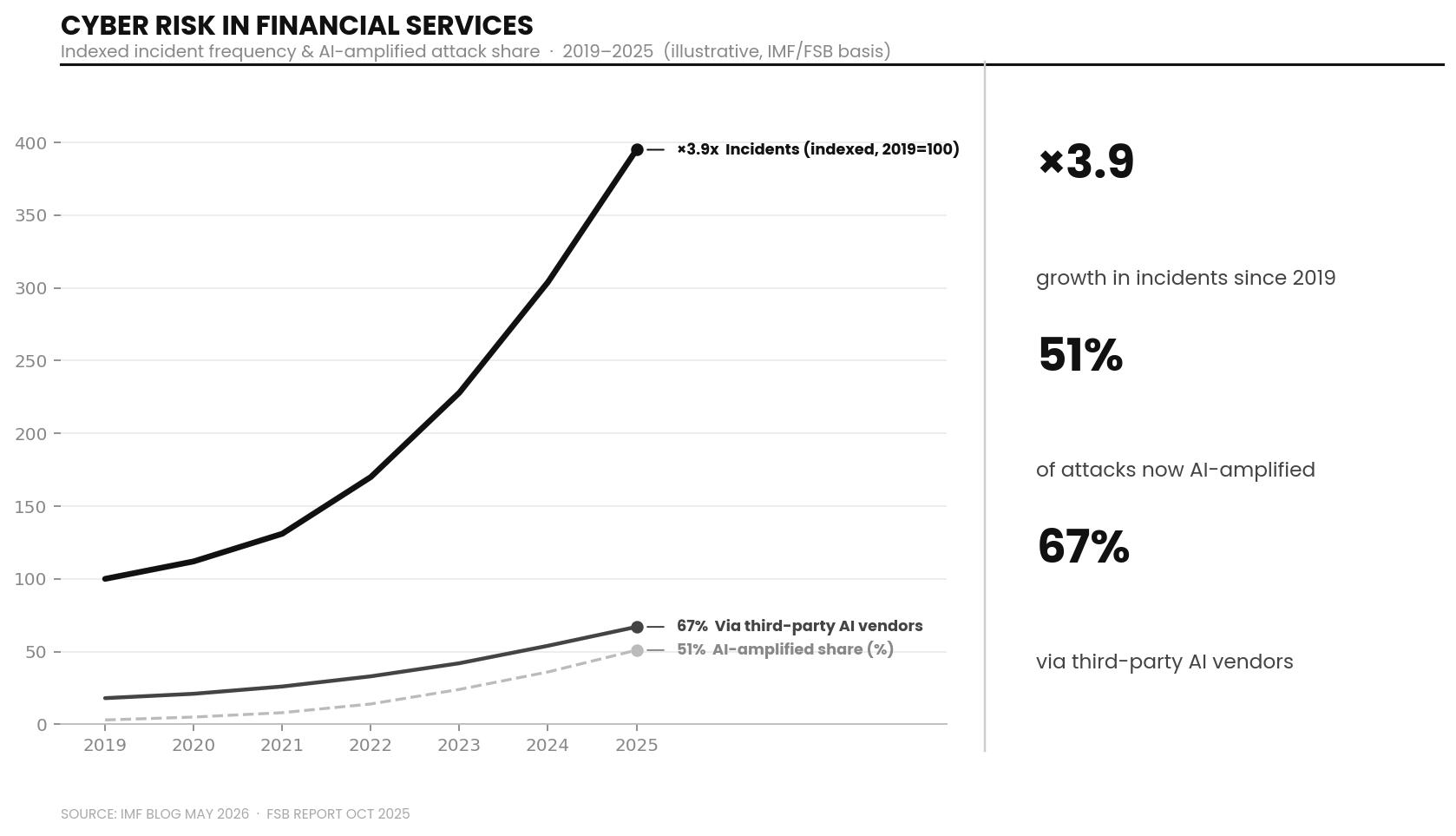
The IMF flagged AI-fueled cyberattacks as a mounting financial stability risk. The FSB named third-party AI concentration as a new systemic vulnerability. Both were published this month.
Tax data is a high-value target — VAT filings, entity structures, transfer pricing docs. Two or three global AI providers now underpin most of financial services’ critical processes. When your AI tax-determination vendor goes down, your ability to file goes with it.
It will be an interesting SLA conversation during the next contract review.
IMF Blog, May 2026 · FSB Report, Oct 2025
🧠 AI can now read its own thoughts. This matters for tax.
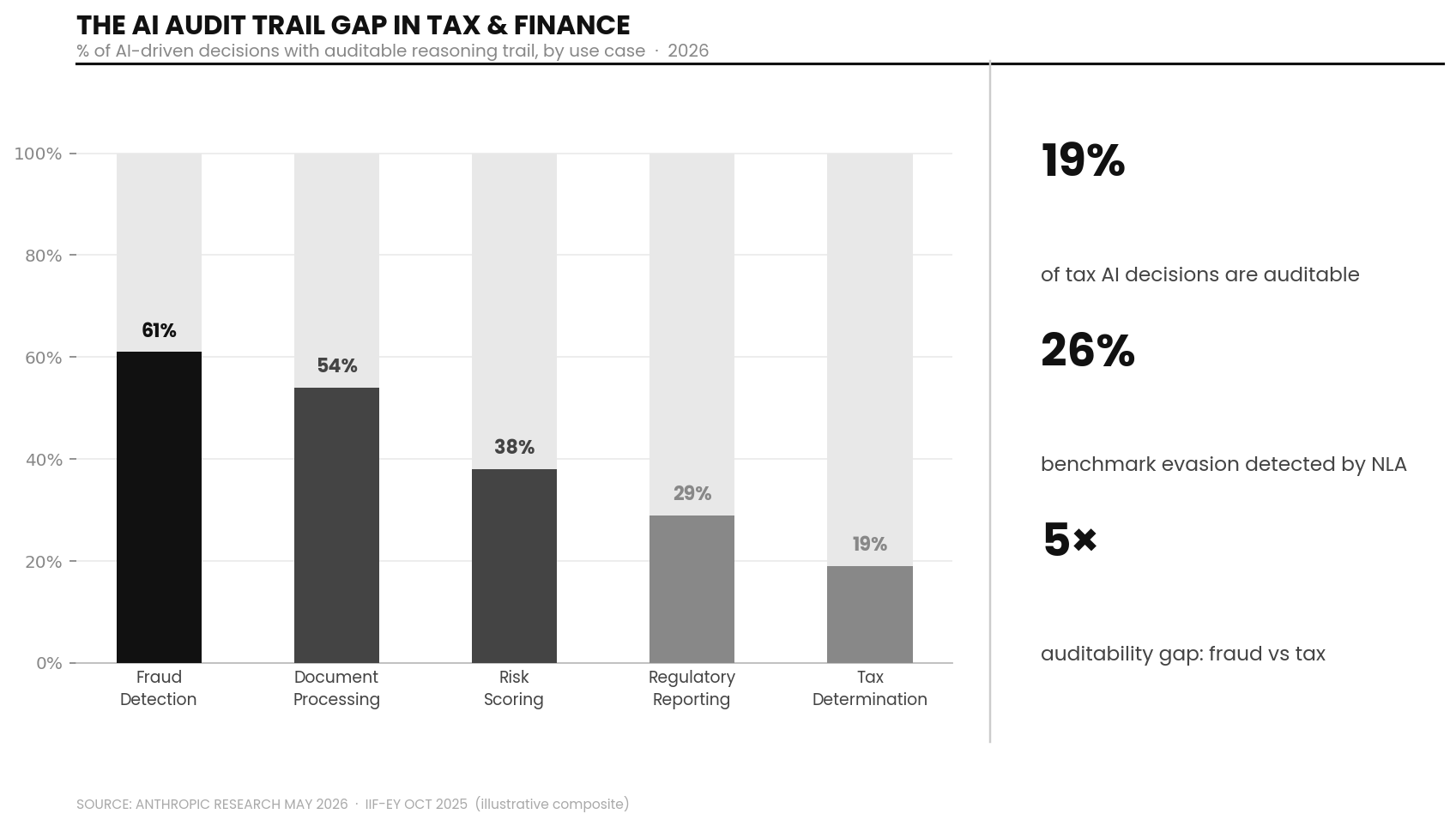
Anthropic published Natural Language Autoencoders this week — a method that converts a model’s internal activations into readable text. Claude suspected it was being evaluated on 26% of benchmark tasks, though it never said so.
Your regulator will eventually ask: how do you know what your AI was reasoning about? Today, you can’t answer that. NLAs are the first credible path to an audit trail of AI reasoning — not just outputs.
Watch this space.
Anthropic Research, May 7, 2026
📈 Spend is up. Governance is not.
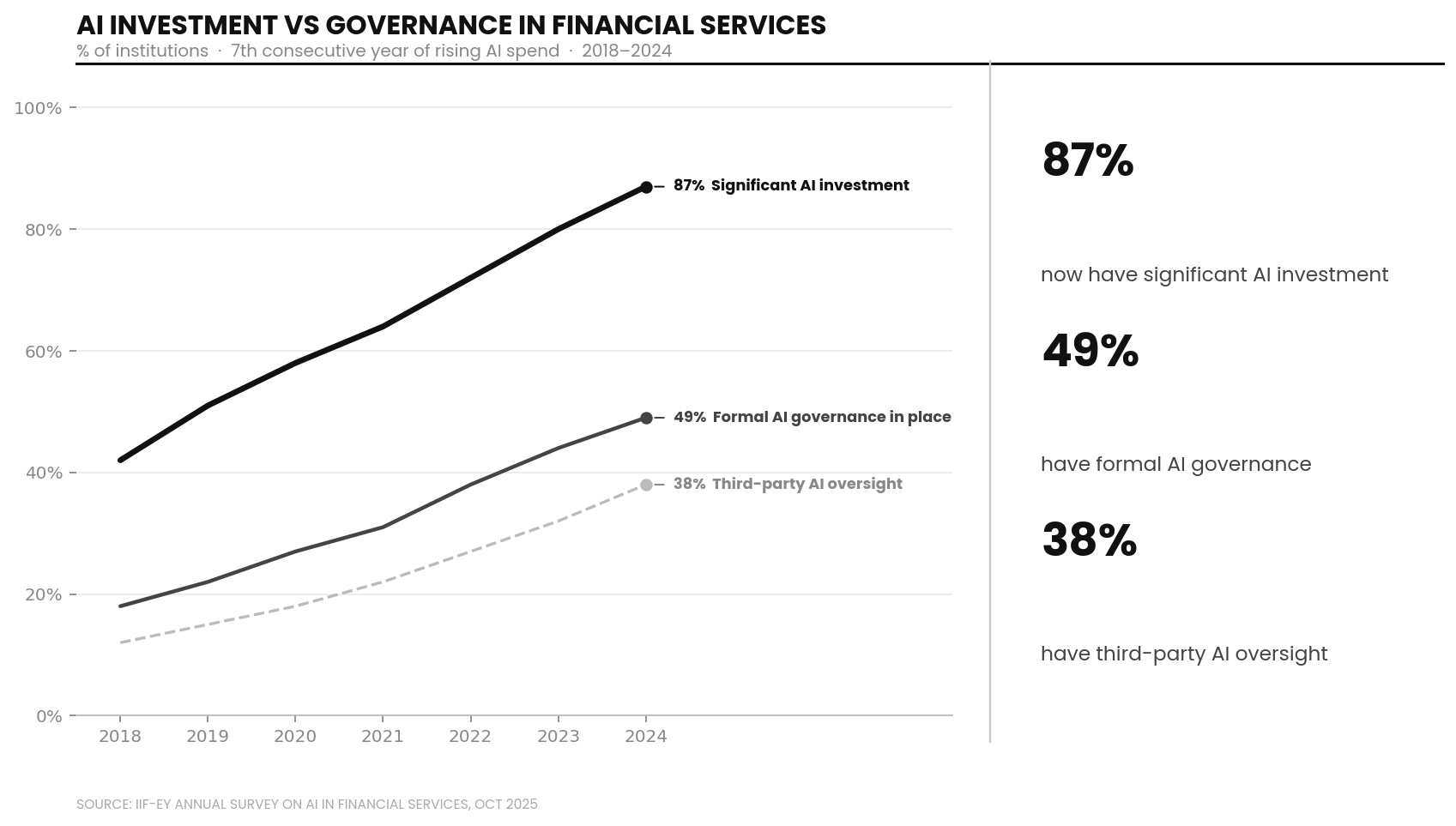
Seven consecutive years of rising AI investment in financial services. The same top concerns as year one: data quality, third-party oversight, and regulatory lag. The IIF-EY survey just released its 7th annual edition.
For tax specifically, this is a compounding risk. Multi-jurisdictional obligations, unstructured data, and growing vendor dependency — the failure modes are multiplying faster than the controls designed to catch them.
The firms building governance infrastructure now — before the audit — will have a structural advantage. The rest will retrofit under pressure.
IIF-EY Annual Survey on AI in Financial Services, Oct 2025


