

If you are thinking of what’s next in tax technology, it’s worth regularly scanning the job ads of Big Four. A quick look reveals the following:
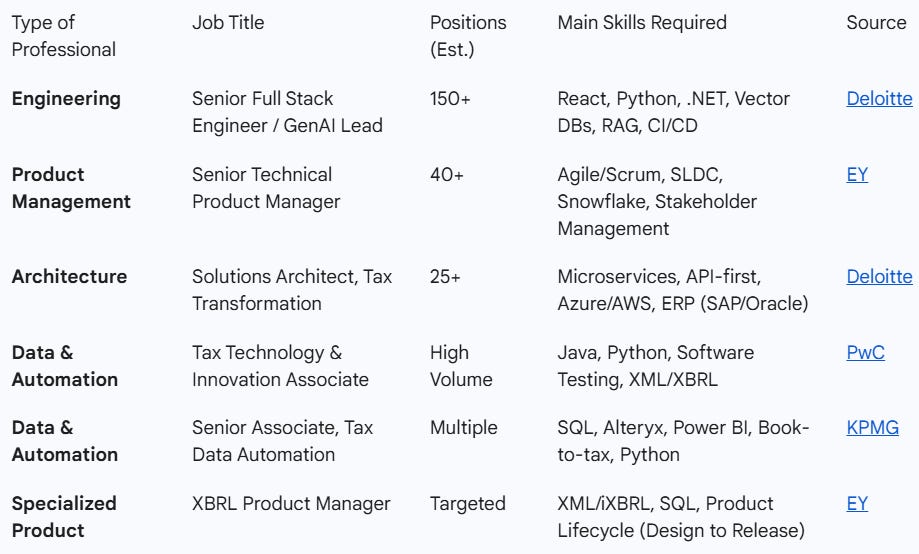
If you are still hiring exclusively from audit backgrounds for your tech roles, you are being outpaced by the very firms you likely hire for advice. The global hiring boards for the Big Four reveal that they have pivoted. They are no longer just accounting firms—they are software houses. They have already realized that compliance is the output of a high-performing engineering engine.
Here is what to do first. Continue reading.
The DIY Architecture Trap
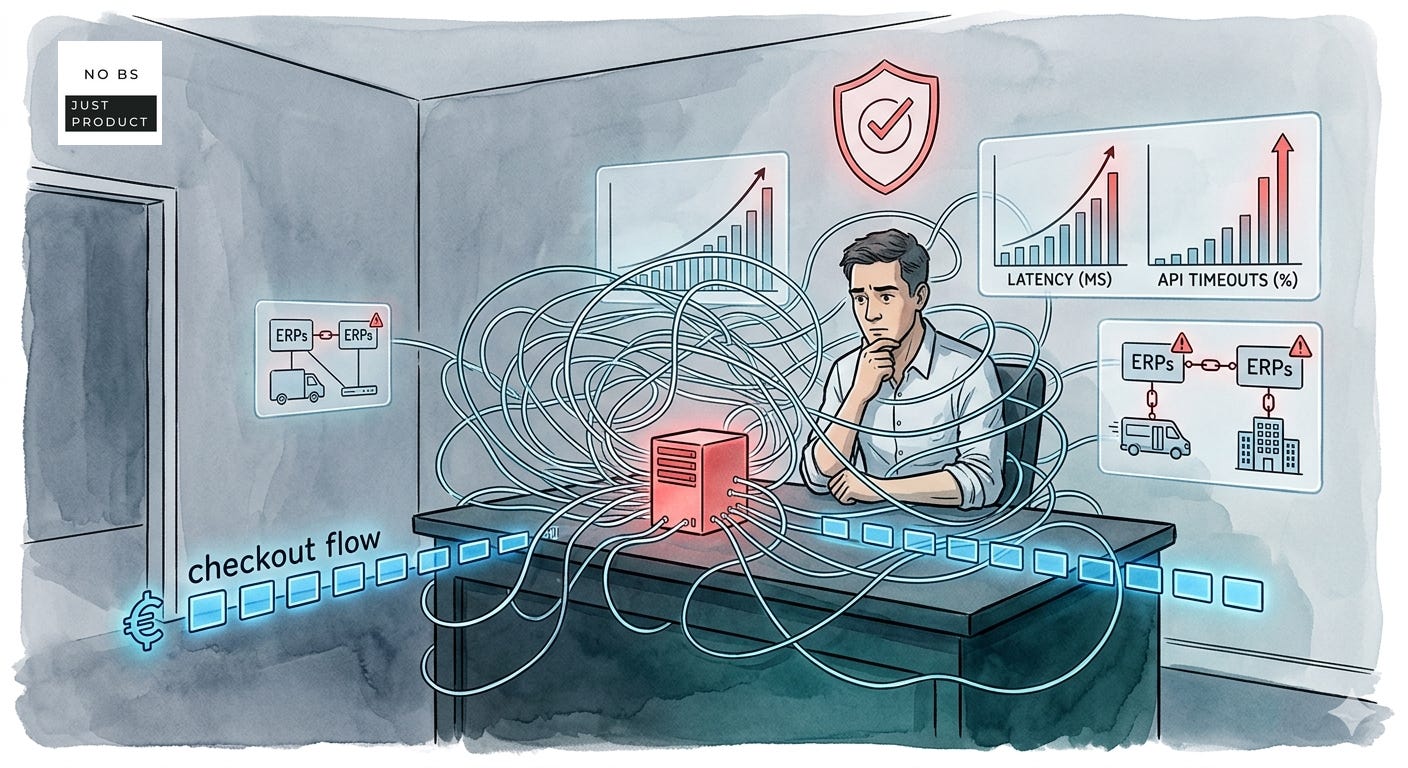
Probably you or somebody you know in Tax/Accounting/Finance have been in this hell hole already: you have a mandate to modernize your global tax architecture. You secure the budget, you gather your brightest team members, and you set out to ensure a system that can handle continuous transaction controls and real-time reporting.
Twelve months later, complaints that you are blocking the business are piling up, and your team is trapped in an endless cycle of trial and error. What went wrong?
You tried to build a software product using only a “Compliance Brain.”
In the S&P 500 and hyper-growth scale-up world, building tax technology is no longer a finance project. It is a hardcore software engineering and product management discipline. If your team is composed entirely of former auditors, tax specialists (ex-Big Four), and CPAs, you are already behind.
When tax professionals are tasked with building or integrating technology, they naturally optimize for the only thing they have learned matters: rules and regulations.
They will map out the most incredibly detailed, compliant logic trees imaginable. But translating that logic into a high-concurrency architecture that handles millions of transactions in milliseconds? That is a different language entirely.
Without seasoned tech professionals at the helm, tax teams often face grave challenges. In my work with different tax teams, I have observed:
The Single Point of Failure: Hardcoding tax logic rather than using microservices, for example.
The Latency Killer: Designing synchronous API calls to external tax engines that block the user experience if the government server takes 5 seconds or 24 hours to respond.
The Tech Stack Prison: Accumulating massive technical debt because “quick fixes” were implemented to hit a compliance deadline, making future expansion nearly impossible.
Tax professionals know the rules and regulations, but they often lack the skills and background to build and maintain tax technology at scale.
The Stakes: Why Trial and Error is Not an Option
In the era of continuous transaction controls (like ViDA or France 2026 E-Invoicing or Mexico 2026 Digital Reform), tax is no longer a post-transaction, end-of-month reconciliation exercise. It is a live dependency.
If you get the architecture wrong, the stakes aren’t just an audit finding three years down the line. The stakes are blocked payments or onboarding flows today. A 5-second delay in e-commerce or many other online businesses is an eternity. If your system hangs, you lose the revenue. You haven’t just added a compliance step; you’ve added a bottleneck to the core business.
You do not have the time to let a finance team “figure out” cloud infrastructure through trial and error.
The Playbook: Hire the “Product Heart”
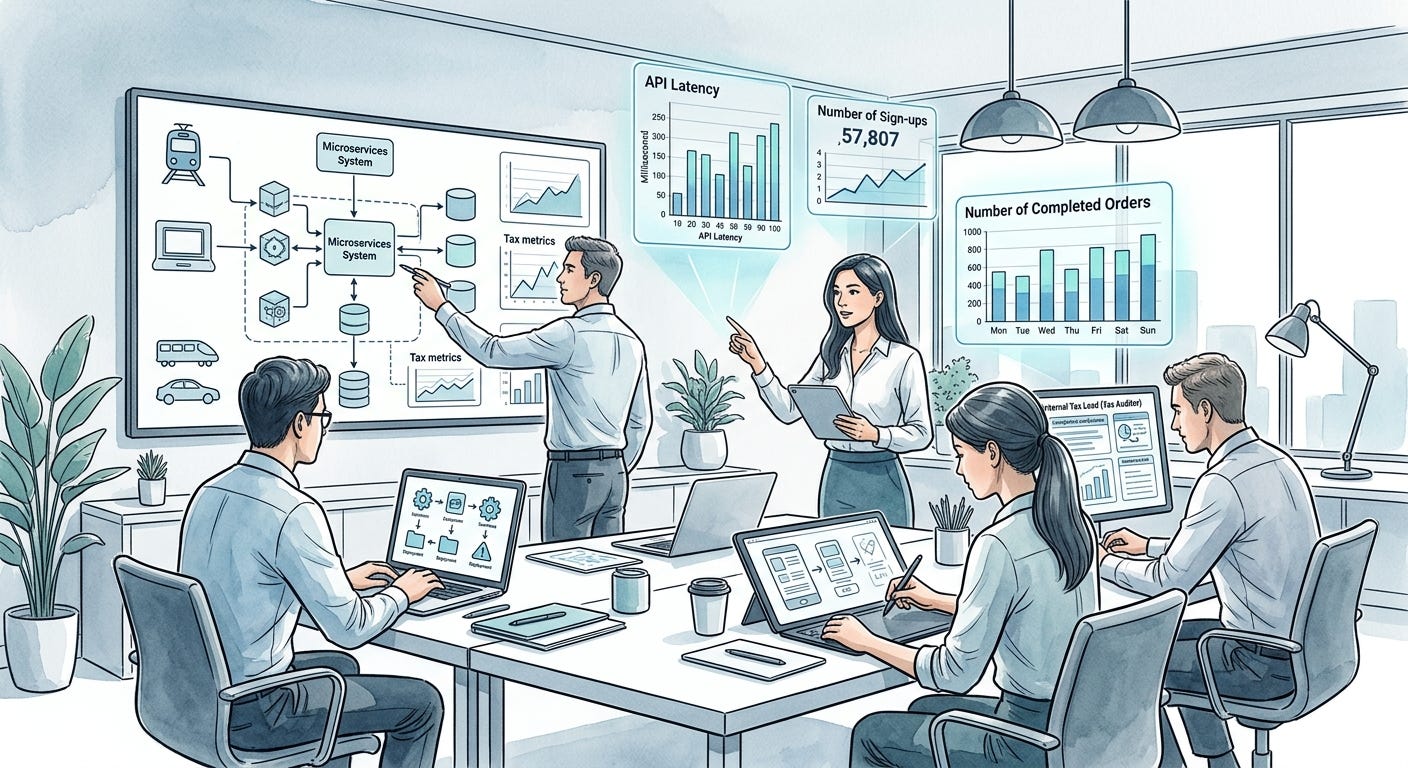
To escape the DIY loop, you need to bring the “Product Heart” into the compliance function. Use this checklist for your next round of interviews to ensure you aren’t just hiring another “Compliance Brain”:
The Product Test: Can the person explain a tax requirement as a “User Story”? (e.g., “As a marketplace seller, I need to see my tax breakdown in real-time so I can price my goods competitively.”)
Architecture Fluency: Do they understand the difference between a synchronous and asynchronous API call? (If they don’t, they will break your checkout flow).
Scalability Mindset: Ask: “How would this logic hold up if we processed 1 million transactions per hour?” A tax person will talk about the law; a tech person will talk about load balancing and latency.
The Translation Layer: Can they sit between a Tax Director and a Lead Engineer and make both feel understood?
Tool Proficiency: Move beyond Excel. Are they comfortable with SQL, Snowflake, Python, Claude Code or at least the logic behind CI/CD pipelines?
A beginner’s mindset supported by product experience is more valuable than blindly applying a tax playbook that worked in an analog world. Stop asking your tax experts to be software architects. Build a true cross-functional tech team.