


Imagine that a Tax, Accounting, and Finance team consists of 100 people. 80 of them are doing work a script could do in 4 seconds. Why?
Because that team is trapped in what I would call a “Tech Stack Prison.” According to the newly released March 2026 study by Thomson Reuters, tax teams are trapped extracting data from fragmented ERPs, shared drives, and disparate CRMs. Tax teams that eliminate these structural, manual bottlenecks reduce preparation time by 50%—reclaiming more than 10,000 hours annually. The report also highlights that human error at scale is the silent killer of enterprise agility. A single decimal-point error, multiplied across millions of global transactions, doesn’t just result in an overpayment; it also triggers audits and blocks new market expansion. A single decimal-point error, multiplied by a quarter, creates massive financial liability.
If you lead Finance or Tax at an S&P 500 company or a hyper-growth scale-up like Anthropic or OpenAI, your team already knows the law. They understand the regulations natively. What they probably lack is the technical architecture to execute that knowledge at scale.
This is where the “Compliance Brain” needs the “Product Heart.”
To prevent compliance from blocking top-line growth, Finance and Tax leaders must stop thinking like back-office administrators and start operating like Product Managers. Here are five architectural strategies to break your team out of the tech stack prison:
1️⃣ Escape the Manual Loop via Automated Pipelines
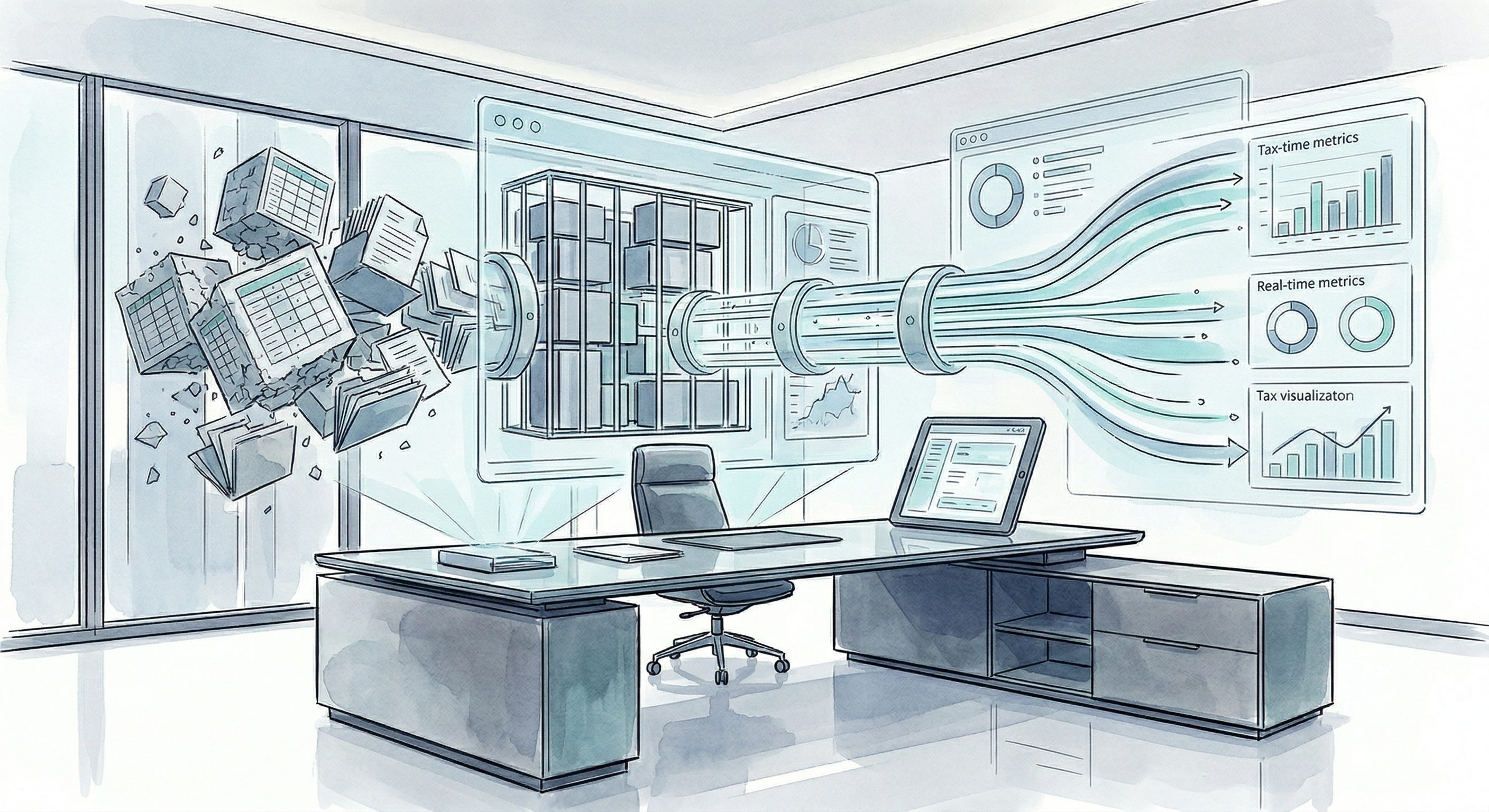
Don’t drown your top talent in arduous reconciliations. The modern standard is to partner with your product and engineering teams to replace fragmented ERP data extraction with automated API pipelines. By feeding a centralized data warehouse, you establish a single source of truth. You turn a chaotic, manual data-gathering exercise into a centralized, automated engine that provides auditability in days, not months.
2️⃣ Eradicate the Spreadsheet Version Nightmare
A comprehensive Bloomberg Tax survey found that 92% of corporate tax professionals view their workpapers as critical. Yet, most rely on legacy spreadsheets that lack cell-level tracking and robust access controls. Moving out of the tech stack prison means adopting systems with embedded native controls. You need automated roll-forwards, version control, and cell-level audit trails so that “version_final_v4.xlsx” never compromises your compliance posture again.
3️⃣ Data Workings at S&P 500 Scale
What I learned while scaling global operations at Uber is that compliance isn’t just about calculating the tax rate; it’s about the data trail. Today, AI can identify anomalies in millions of transactions and generate reporting at a massive scale. But modern tax and finance tech shouldn’t just flag an error; it should simulate the fix upstream.
Shift your system from reactive error-catching to proactive, systemic resolution.
4️⃣ Move from Historical Reporting to Predictive Exposure
As outlined in EY’s Global Tax and e-Invoicing strategies, governments are shifting to near real-time compliance (like the EU’s ViDA or LATAM’s continuous transaction controls). They want your data before the transaction is finalized. Your tech stack must evolve from historical reporting to predictive analytics. AI should be leveraged to identify tax exposure and nexus risks before they materialize, allowing you to build compliance roadmaps that accelerate—rather than delay—business expansion.
5️⃣ Tax as a Product, Not a Project
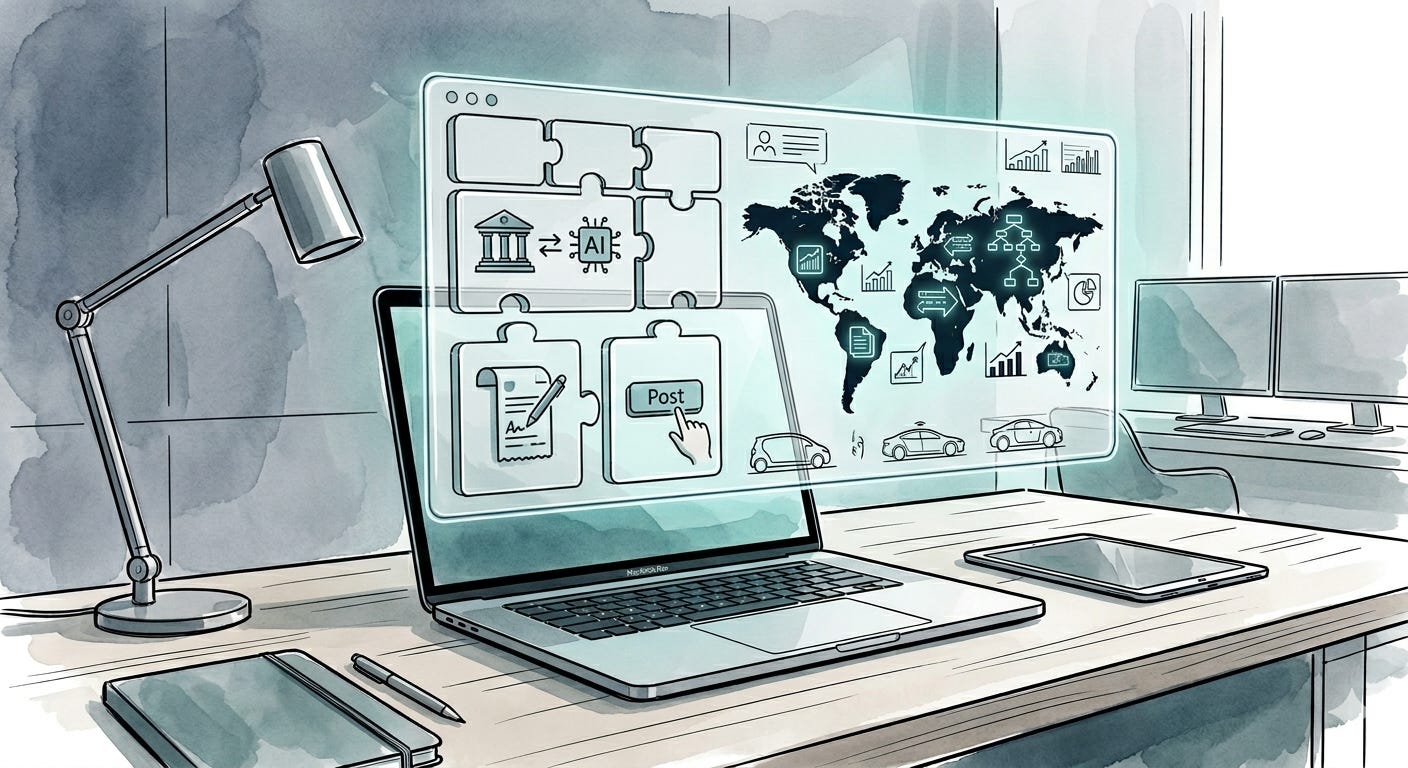
Tax requirements shouldn’t be a one-off IT ticket every time a regulation changes. You need to build a reusable logic library. When your company decides to expand into its next market, you shouldn’t have to rebuild your tech stack from scratch. A modular, product-led architecture allows you to enter 100+ jurisdictions seamlessly because the foundational logic is already centralized and adaptable.
For modern enterprises, compliance is merely the baseline. Efficiency, real-time insight, defensible data trails, and enabling business outcomes are the true prizes.
Take a hard look at your current infrastructure: Is your tax logic a standalone “to-do” list, or is it baked directly into your core product roadmap?
Sources
For those looking to dive deeper into the architectural shifts and data driving this transformation, I highly recommend reviewing the foundational research:
Thomson Reuters: 2026 Corporate Tax Department Technology Report (Primary data source on AI integration timelines and the 10,000-hour reclamation metric).
EY (Ernst & Young): Global Tax e-Invoicing & Digital Reporting Solutions (Context on the shift toward near real-time, predictive tax authority interactions).
Bloomberg Tax: Corporate Tax Department Benchmark Report (Data regarding the 92% reliance on legacy workpapers and spreadsheet vulnerabilities).